The Indian food services industry is undergoing a massive transformation, and cloud kitchens are leading this change. With rising urbanization, increasing demand for online food delivery, and changing consumer behavior, cloud kitchens have emerged as one of the most scalable and capital-efficient food business models. However, while launching a cloud kitchen has become easier, scaling it sustainably remains the biggest challenge.
This is where a well-defined cloud kitchen growth strategy becomes critical.
In this comprehensive guide, we break down a step-by-step roadmap to help food entrepreneurs, restaurant brands, and food startups scale their cloud kitchen business profitably. From brand positioning and location planning to technology, marketing, and multi-city expansion—this blog covers everything you need to build long-term success in the cloud kitchen ecosystem.
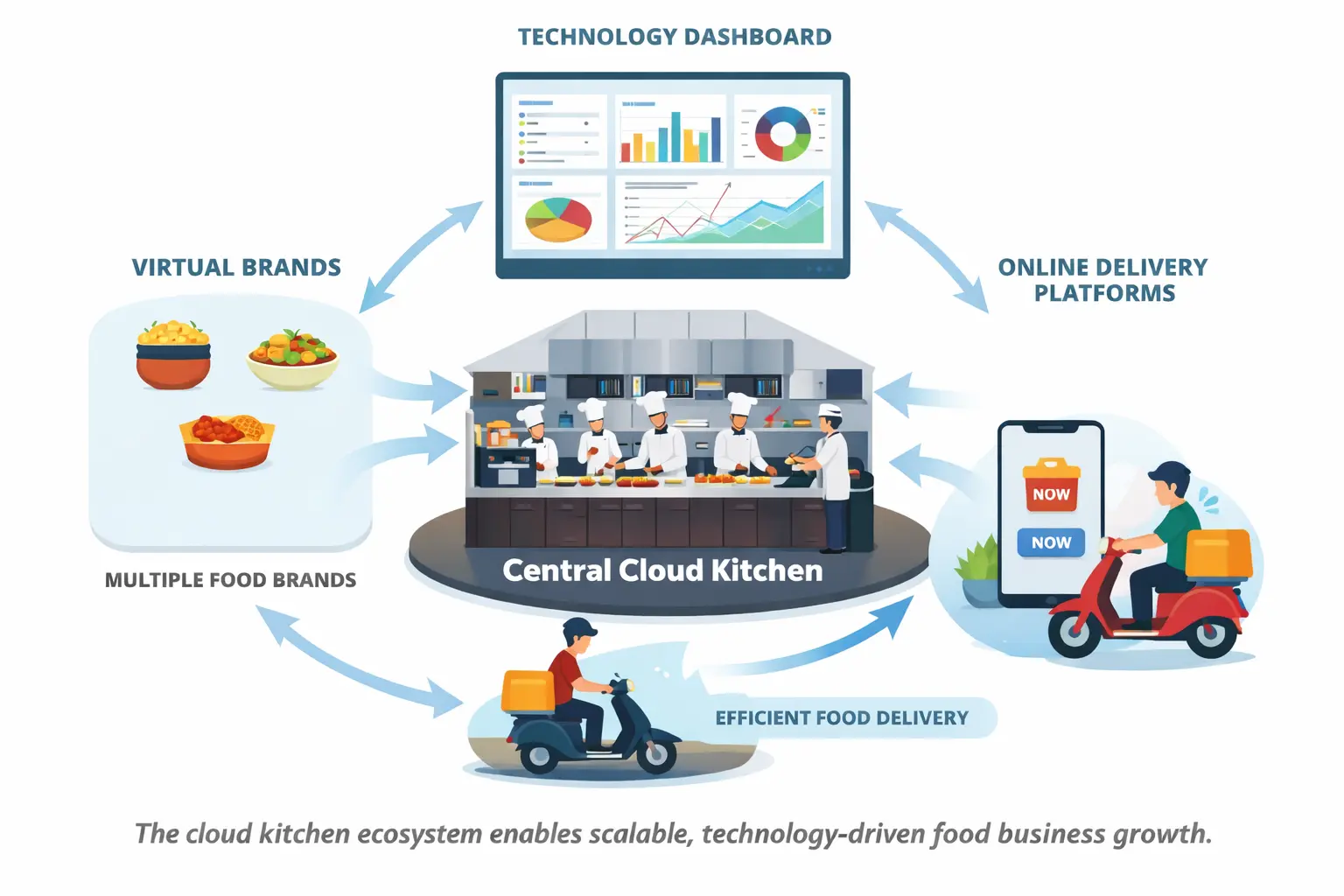
India’s cloud kitchen market has witnessed exponential growth over the past few years. Factors driving this growth include:
Unlike traditional restaurants, cloud kitchens allow brands to test, iterate, and scale quickly. But growth without a clear strategy often leads to poor unit economics, operational chaos, and brand dilution.
A successful cloud kitchen growth strategy focuses on:
Growth should never come at the cost of stability. Before expanding, ensure that your first kitchen is operationally strong and profitable.
A scalable cloud kitchen menu should:
Menu engineering plays a crucial role in improving contribution margins and reducing wastage—two critical factors in cloud kitchen growth.
Key metrics to track at the base level:
Unless your first kitchen shows healthy unit economics, scaling will only multiply losses.
One of the biggest mistakes cloud kitchen operators make is treating their brand as a commodity on delivery platforms.
Strong brands scale faster. Your brand should clearly communicate:
Instead of being “another biryani brand,” define what makes you unique.
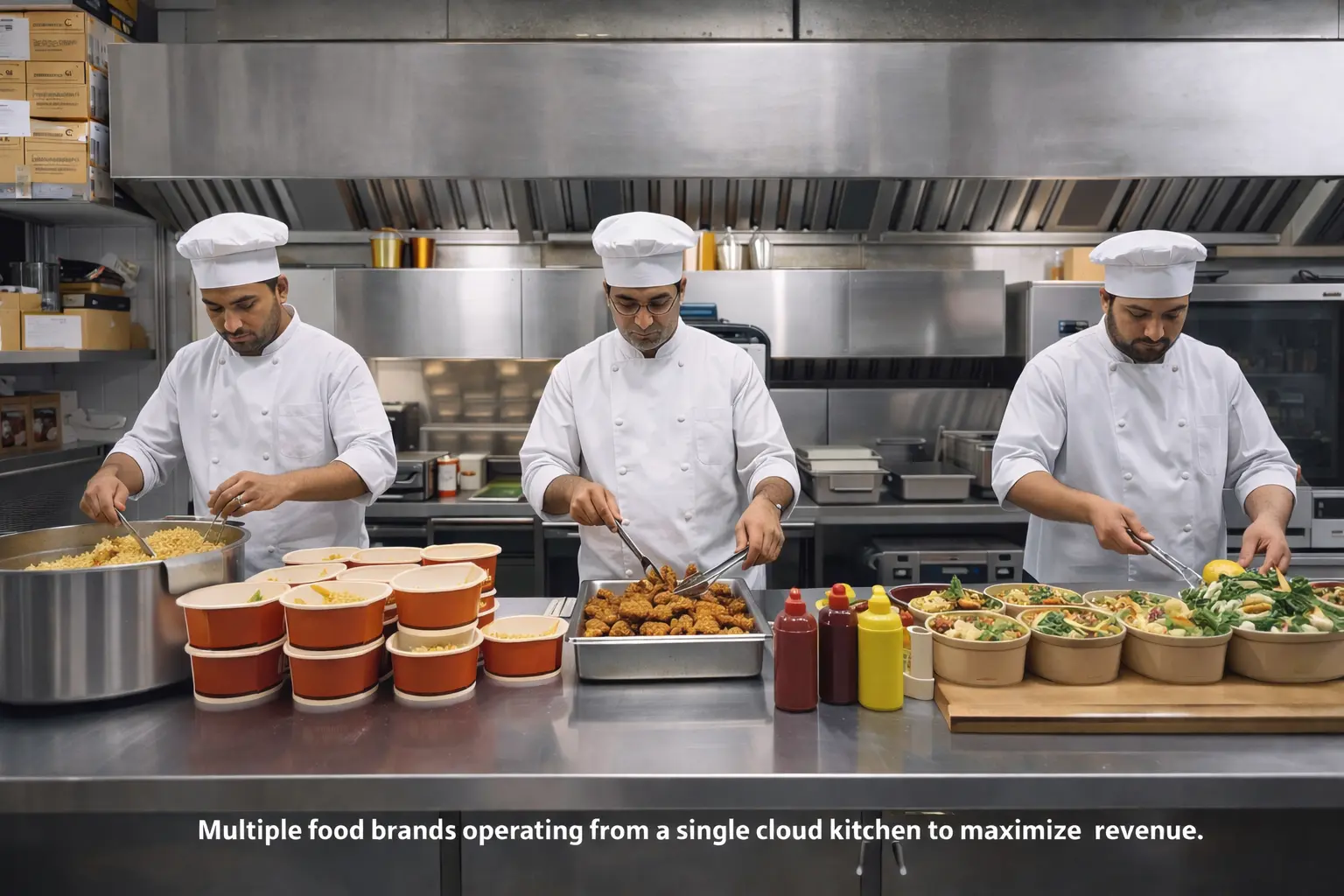
A proven cloud kitchen growth strategy is launching multiple virtual brands from one kitchen, each catering to different demand segments.
For example:
This maximizes revenue per square foot while minimizing infrastructure costs.
Learn how food entrepreneurs launch multiple food brands efficiently with Kouzina FoodTech:
While cloud kitchens don’t rely on footfall, location still plays a critical role in delivery efficiency and order density.
A data-backed location strategy focuses on:
As brands scale, many adopt a hub-and-spoke model:
This model reduces costs, ensures consistency, and enables faster multi-location expansion.
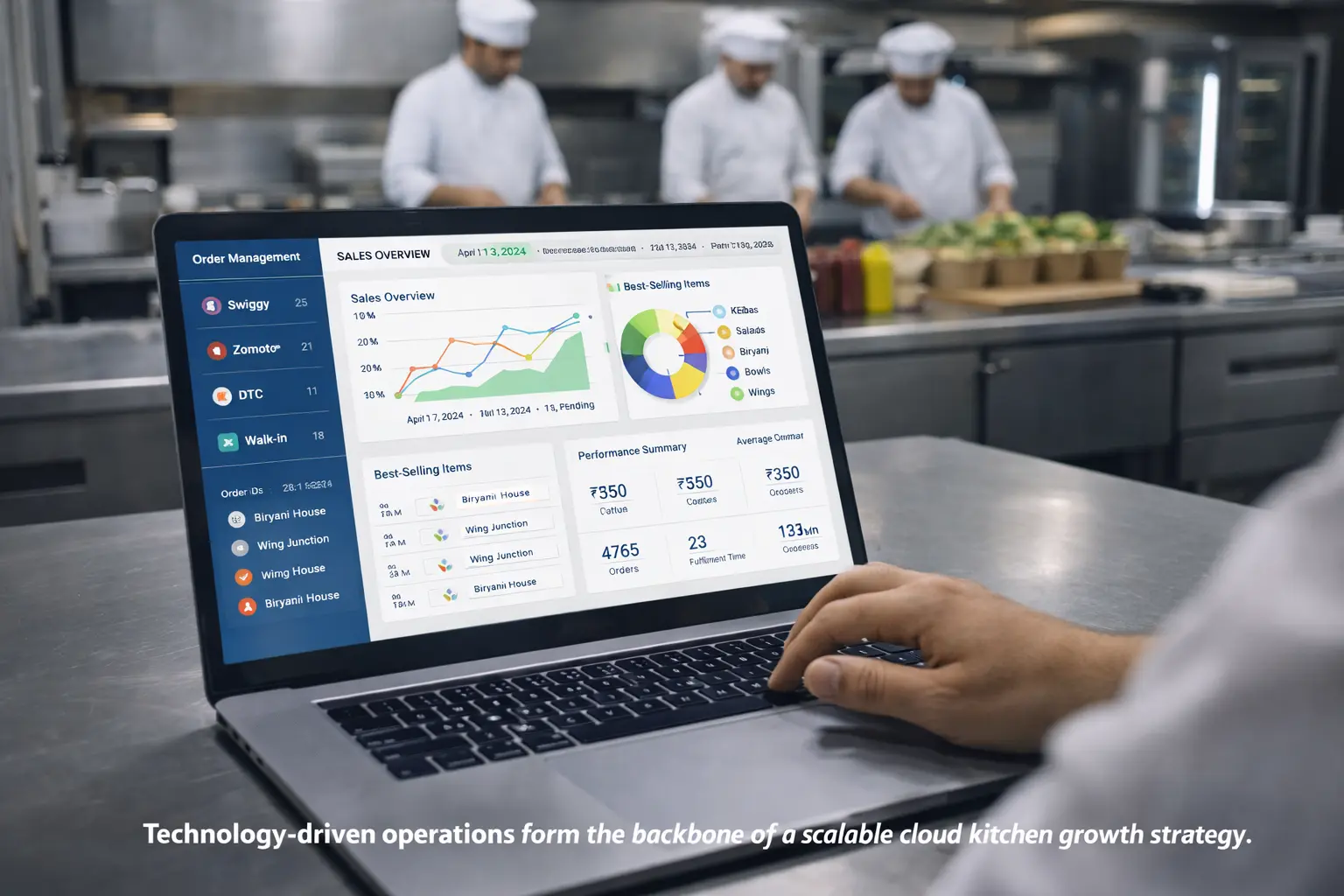
Technology is not optional—it is the backbone of every scalable cloud kitchen growth strategy.
Technology should enable:
Food-tech platforms like Kouzina FoodTech help brands scale using advanced cloud kitchen technology and infrastructure:
Customer acquisition and retention are at the heart of sustainable growth.
High-performing brands focus heavily on:
Ratings and reviews significantly impact visibility and conversion rates.
Official guide for restaurant partners:
Zomato Restaurant Partner Resources –
Effective growth marketing includes:
Retention is cheaper than acquisition. Focus on:
As you grow, operational inefficiencies get magnified.
Standard Operating Procedures should cover:
Consistent training ensures uniform quality across all locations.
Centralized sourcing helps:
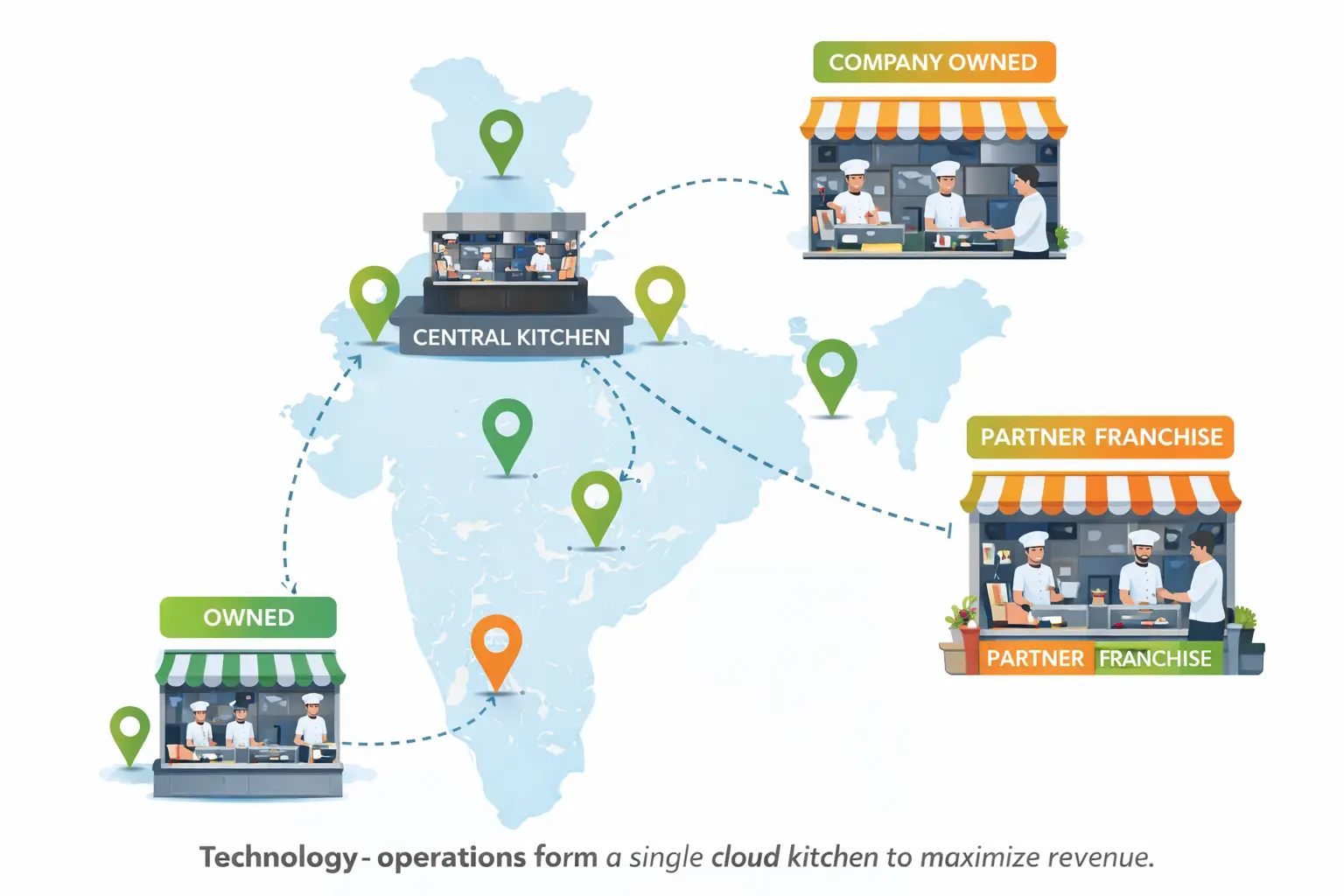
Once your core kitchen model is profitable, it’s time to expand.
Best suited for:
A popular cloud kitchen growth strategy is expanding via franchise and partner-led cloud kitchen models, allowing faster scale with lower capital risk.
Explore cloud kitchen franchise and partner opportunities with Kouzina FoodTech:
Growth without financial discipline is risky.
If you plan to raise capital:
Investors back systems—not just food brands.
Scaling increases regulatory complexity.
Ensure compliance with:
FSSAI official guidelines for food businesses:
The future of cloud kitchens will be driven by:
Brands that innovate early will lead the next phase of growth.
Building everything from scratch is time-consuming and risky. Partnering with an experienced food-tech company like Kouzina FoodTech allows entrepreneurs to:
A successful cloud kitchen is not built overnight—it is grown strategically. A structured cloud kitchen growth strategy helps food entrepreneurs move from a single kitchen to a scalable, multi-brand, multi-city business.
By focusing on strong fundamentals, technology-driven operations, brand differentiation, and smart expansion models, cloud kitchens can achieve sustainable and profitable growth in India’s competitive food-tech landscape.